Fundraising & Investment Strategy

Muhammad Ayub
Thursday, January 8, 2026
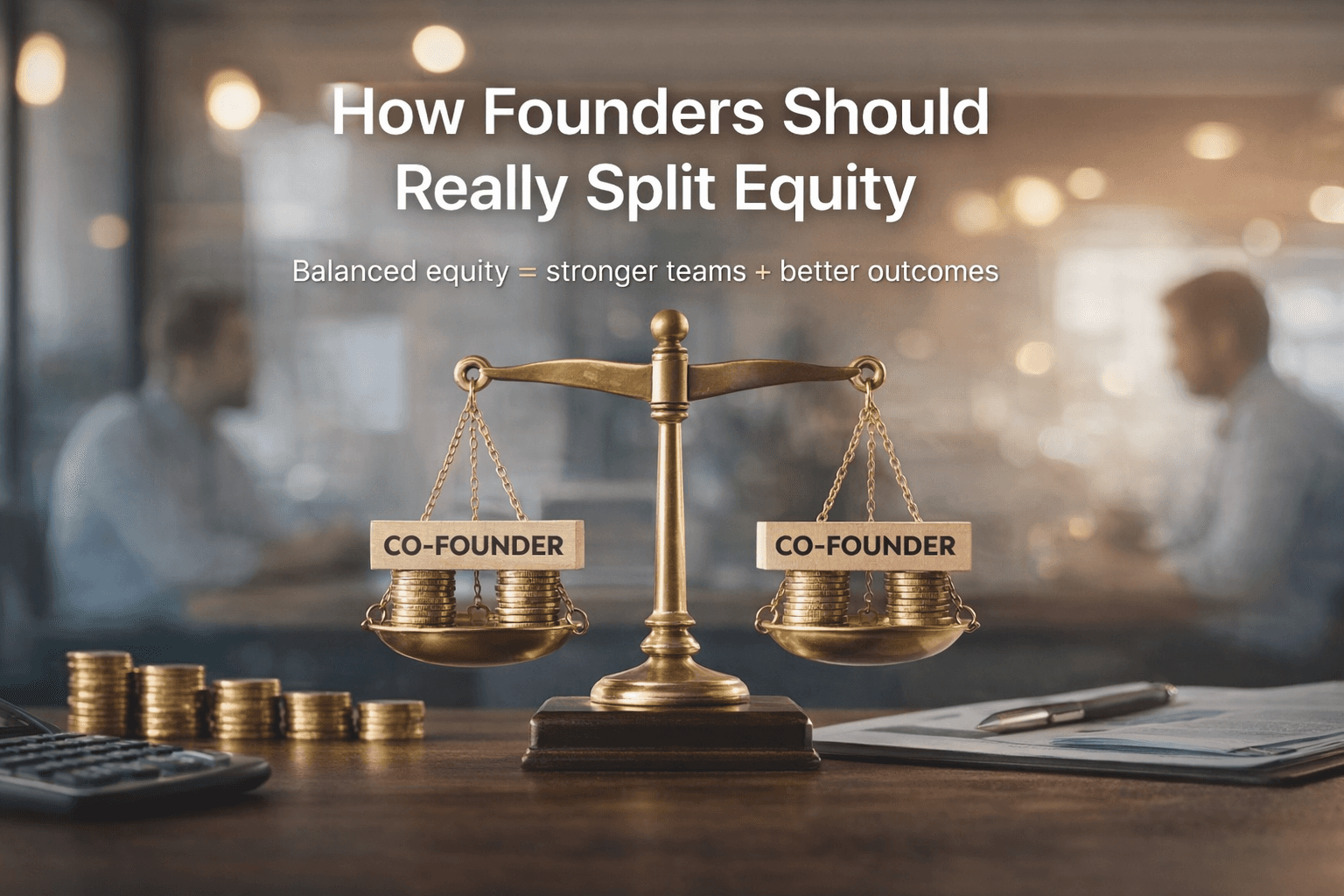
How Founders Should Really Split Equity
One of the most common questions founders ask early on is how to split equity with their co-founders.
Search online and you’ll often find advice encouraging unequal splits — justified by early contributions, timing, or seniority. Michael Seibel has repeatedly pushed back on this thinking after reviewing thousands of startup applications at Y Combinator.
The mistake founders make is overweighting early work.
The common justifications for unequal splits
Founders often argue for unequal equity because:
One person came up with the idea
One founder started earlier
Someone worked full-time first
One founder took no salary
Someone is more experienced or senior
A co-founder joined after fundraising or launch
A “tie-breaker” is needed for decisions
These reasons may sound logical in the first few months.
But startups aren’t built in months.
They’re built over years.
Why early contributions don’t justify long-term inequality
Michael Seibel highlights several fundamental flaws in unequal founder equity splits.
1. Startups take 7–10 years to build
Small differences in the first year don’t justify massive ownership gaps over the next decade. Most of the value creation still lies ahead.
2. Equity drives motivation
Startups are hard and most fail. When founders feel under-rewarded, motivation drops. A smaller equity slice is worthless if the company never succeeds.
3. Investors read equity splits as signals
If a founder only owns 5–10%, investors assume they’re either replaceable or not valued. That perception directly impacts fundraising and credibility.
4. Execution matters more than ideas
Ideas are cheap. Execution is everything. Unequal splits often over-reward the idea and under-reward the people who turn it into a real business.
The case for equal (or nearly equal) equity
Michael Seibel’s advice is simple and consistent:
split equity equally — or as close to equally as possible.
These are the people you’ll spend years building with.
These are the people you’ll make the hardest decisions with.
These are the people you’ll celebrate with if it works.
If you’re not comfortable giving someone an equal share, that’s often a sign you’ve chosen the wrong co-founder.
Protecting the company the right way
If fear of a co-founder leaving is the concern, the solution isn’t unequal equity — it’s proper vesting.
A standard setup includes:
Four years of vesting
One-year cliff
This ensures founders earn their equity over time and protects the company if things don’t work out early.
Final thought
Startups aren’t about protecting ego or past effort.
They’re about aligning incentives for the future.
As Michael Seibel emphasizes, equal or near-equal equity splits create stronger teams, better execution, and higher chances of long-term success.
Share It On: